Now accepting reservations for March 1 to November 1, 2027. Check dates
Check availability

Reservations 406 821 0894

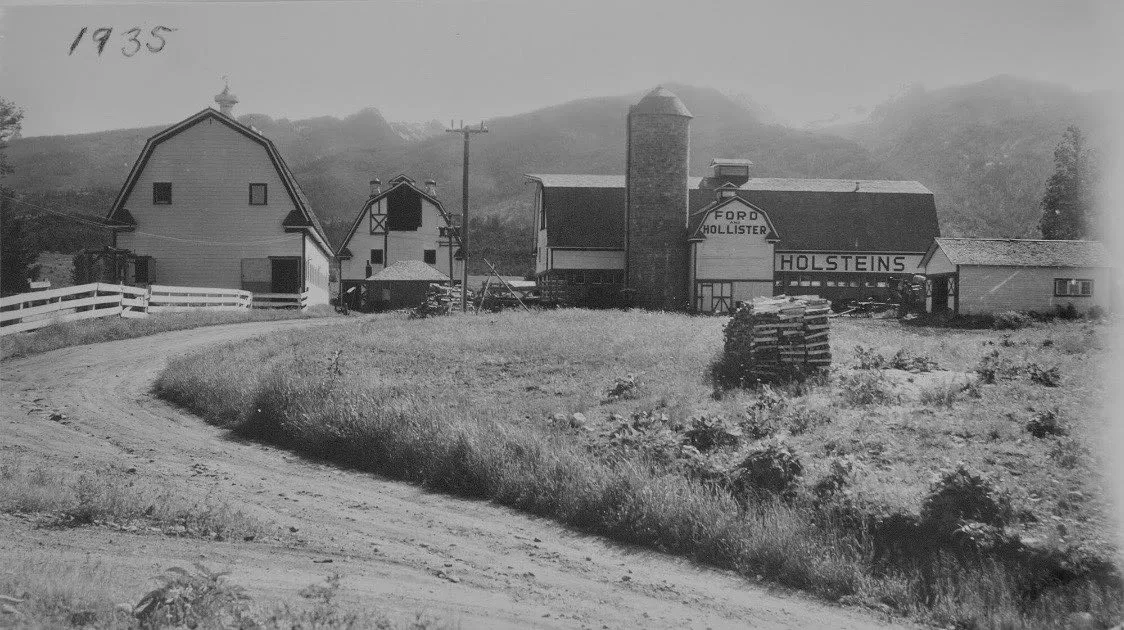
Archival photograph dated 1935 of the ranch barns and silo beside a curving dirt road, with signs reading Ford Hollister and Holsteins, and mountains behind

The full history · Bitterroot Valley · Est. 1880

From nativetrail toDutton Ranch.

A Salish homeland, a Nez Perce trail, an apple orchard, a model dairy, one of the first guest ranches in the West, and today a working family ranch known to millions on screen.

Begin

At a glance

  • Homesteaded1880
  • Ranch acreage2,500
  • Lodge6,000 sq ft

Long before the cameras, this corner of Montana’s Bitterroot Valley was Salish land, crossed each year by the Nez Perce on their way to the bison hunting grounds. Lewis and Clark followed the native trail in 1805, and in 1877 Chief Joseph led his people across the ranch. Homesteaders, an apple orchard, a glass tycoon’s lodge and one of the first guest ranches in the West came after.

Nine chapters, told in order. The published sources behind this history are listed at the end of the page.

Chapter I

Before 1805: A Salish homeland

The ranch lies in the western part of lands the Salish people inhabited for hundreds of years.

Every year the Nez Perce traveled a trail south through this country to reach the bison hunting grounds of the Big Hole Valley. They often banded together with the Salish to counter threats from other tribes, notably the Blackfoot.

The native trail traversed the ranch just west of the Lodge and funneled down to where the barns are now located.
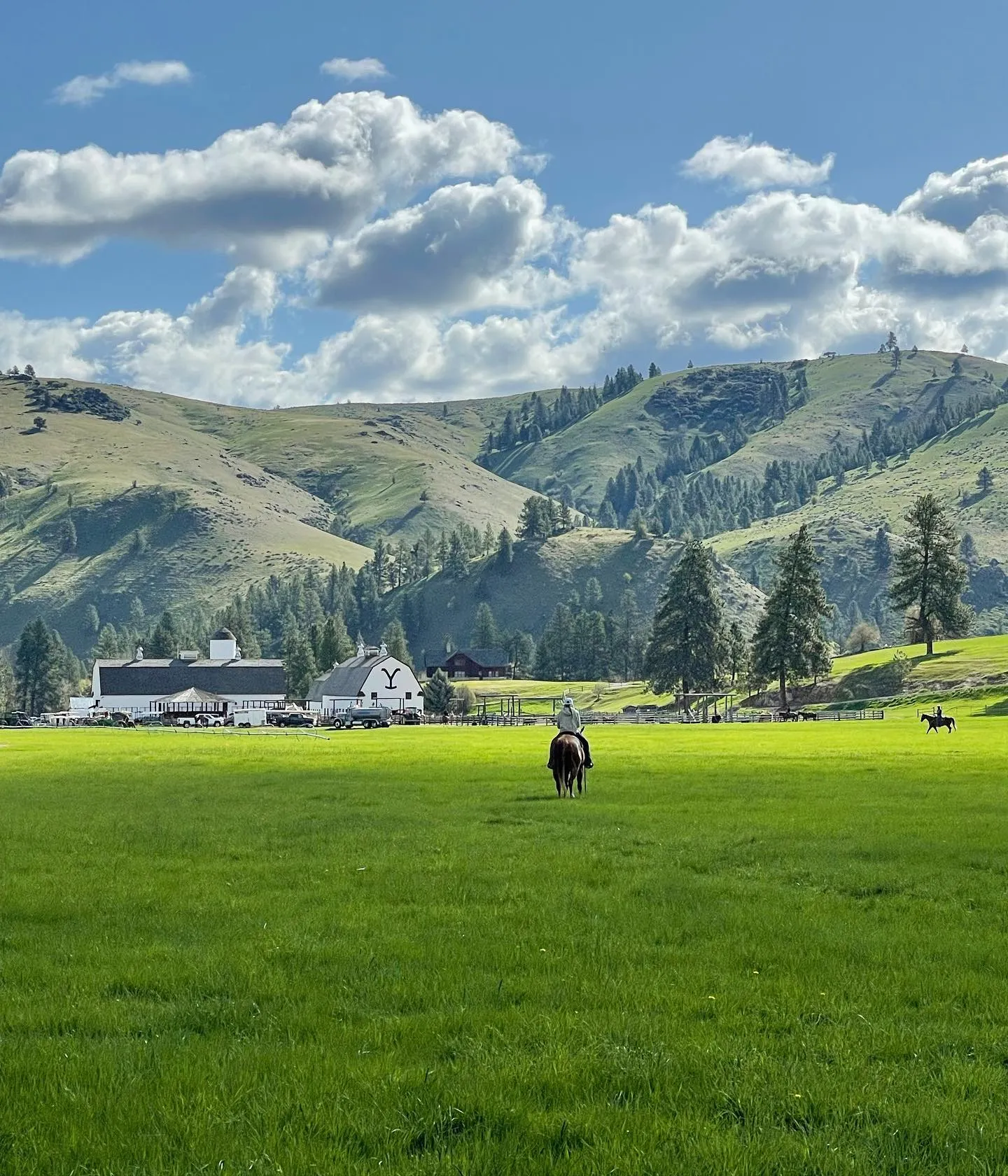
A rider on horseback crossing a wide green meadow toward the white ranch barns, with forested hills of the Bitterroot Valley rising behind
The meadow below the barns, where the old trail came down.

Chapter II

1805: Lewis and Clark on the trail

In September 1805, Lewis and Clark entered the northern Bitterroot Valley.

On this stretch of their expedition they followed the trail used by the native tribes, the same route the Nez Perce traveled each year toward the Big Hole.

Chapter III

1877: Chief Joseph crosses the ranch

In the summer of 1877, during the Nez Perce War, Chief Joseph led his people across this ground in their flight from the U.S. Army.

More than seventy years later, the ranch would take his name.

Chapter IV

1880: The Shelton Ranch

Settlers homesteaded the property in 1880.

Its water rights were registered in 1884, and the land was known then as the Shelton Ranch.

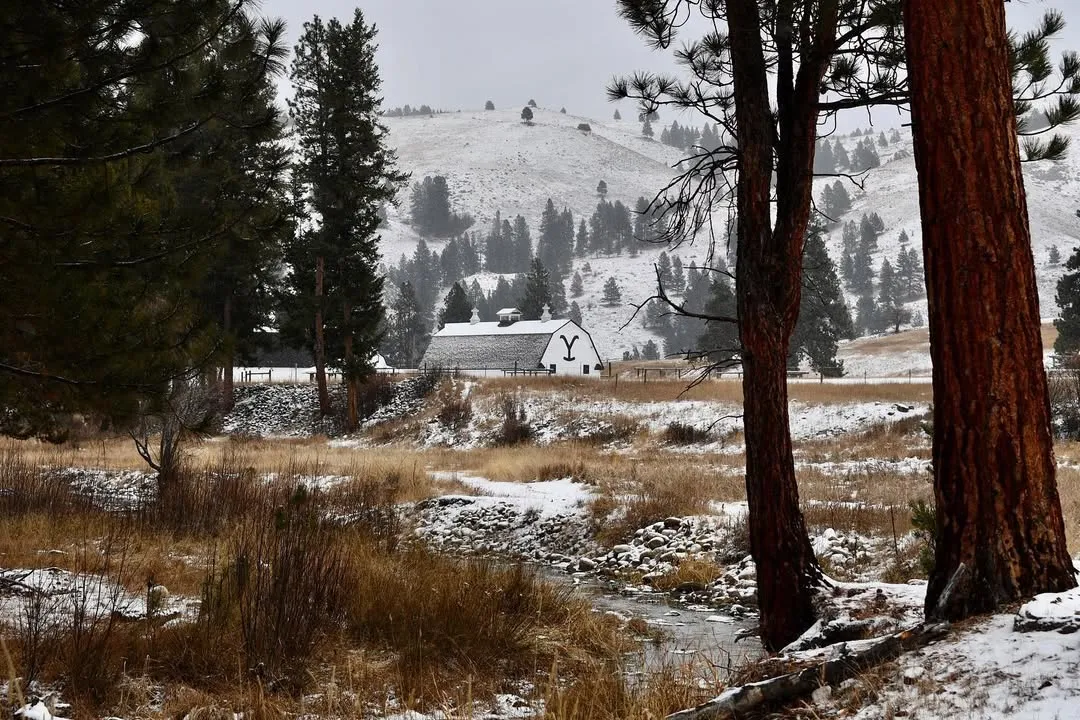
A creek winding through dry grass and light snow under tall ponderosa pines, with a white barn and snow-dusted hills in the distance
Early winter on the creek, with the barns beyond.

Chapter V

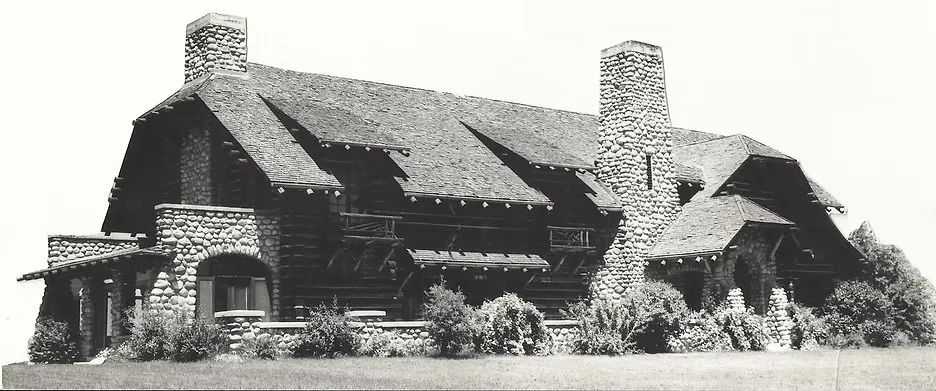
1914: The Ford-Hollister Lodge

In 1914 the 2,500 acre ranch was bought by the glass tycoon William S. Ford and federal judge Howard Clark Hollister, from Ohio.

At the time of the purchase the ranch was a thriving apple orchard. Using the log and stone native to the grounds, William Ford began a three year endeavor to build the Ford-Hollister Lodge.

The 6,000 square foot lodge was designed by the architectural firm of Bates & Gamble, and has been featured in publications such as Architectural Digest and American Log Homes. It stands in the company of the Old Faithful Inn in Yellowstone National Park and the lodges of Glacier National Park.

One of the great log structures of the American West.

Black and white archival photograph of the Ford-Hollister Lodge: a long log building with deep shingled roofs, two tall river stone chimneys and stone arched porches, framed by shrubs
The Ford-Hollister Lodge, built of log and stone from the ranch.Archival photograph

Chapter VI

1920s: Three barns and a model dairy

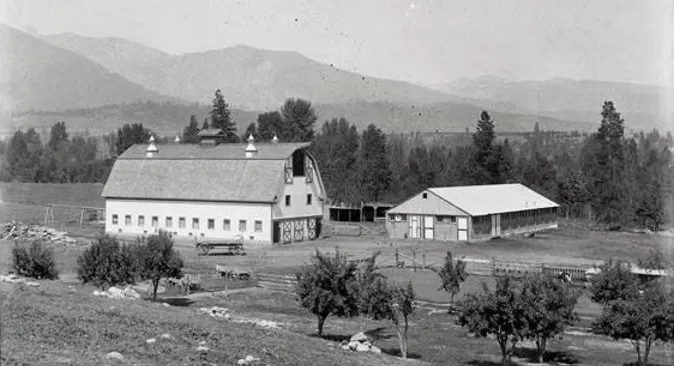
Along with the lodge, Ford built three massive barns as the centerpiece of his model dairy.

He later replaced the apple trees with the largest herd of Holsteins west of the Mississippi. In the early 1920s the dairy operation gave way to a Hereford herd.

The largest herd of Holsteins west of the Mississippi.

Then
Black and white archival photograph of a large gambrel roofed barn with cupolas and a long low second barn, young orchard trees in the foreground and mountains behind
Barns on the Ford-Hollister Ranch.Archives & Special Collections, Mansfield Library, The University of Montana-Missoula
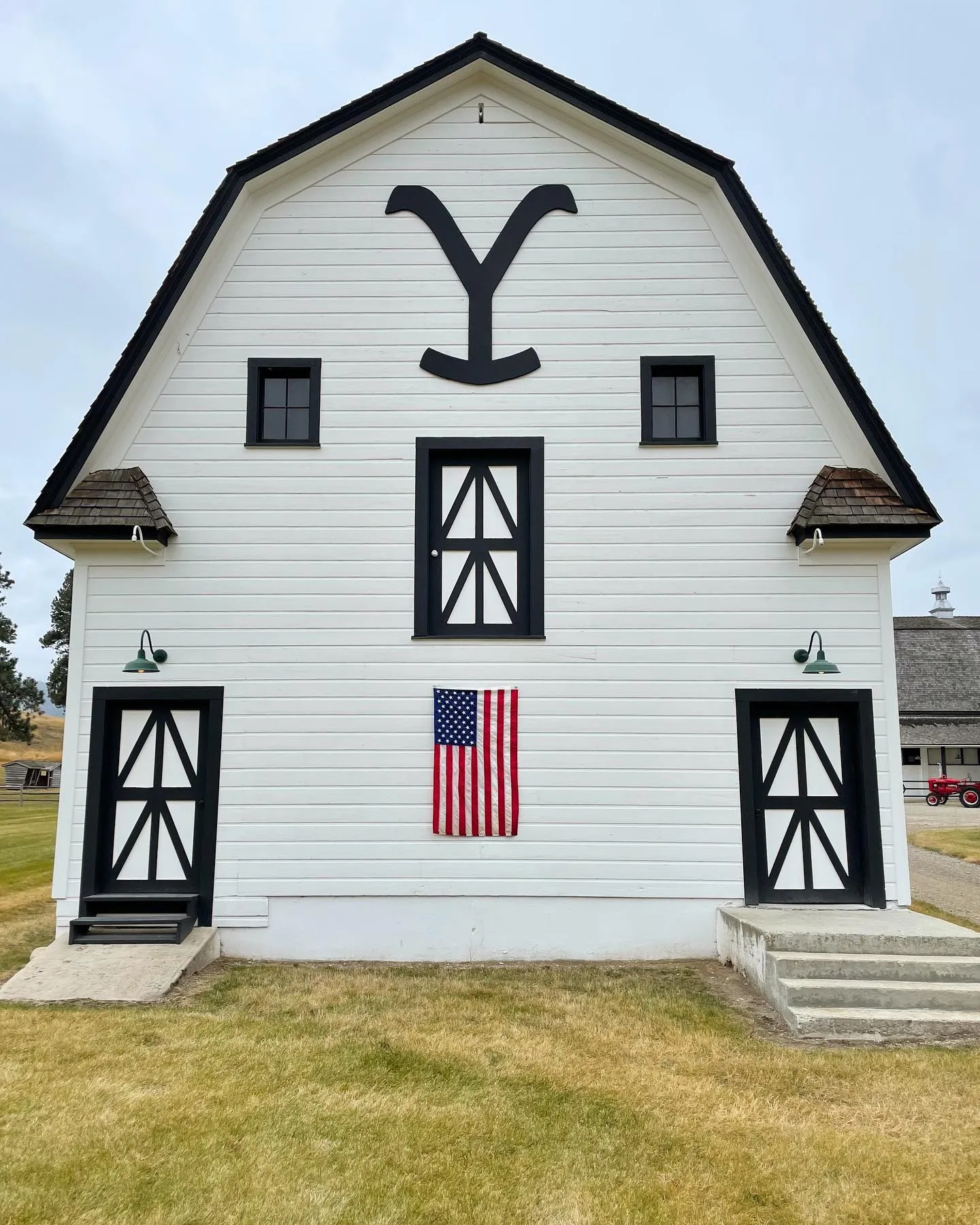
Now
The white gambrel end of a ranch barn today, with black trimmed windows and doors, a large black Y brand under the roof peak and an American flag between the doors
A ranch barn today.

Chapter VII

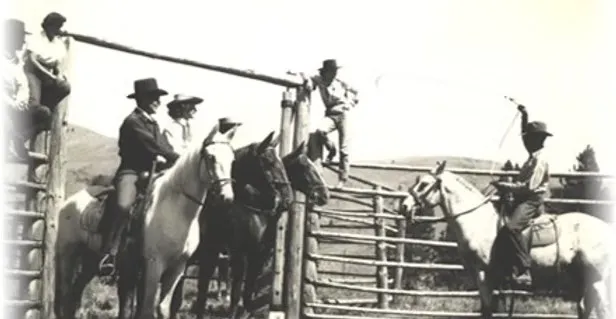
1935: One of the first guest ranches in the West

After William Ford’s passing in 1935, his wife May Ford and her daughters, Phyllis and Billie Ann, opened and operated one of the first guest ranches in the West.

They had help in the work from their ranch manager, Ben Cook.

One of the ranch’s two guest cabins carries his name. See the Ben Cook Cabin

Sepia archival photograph of riders in cowboy hats on light and dark horses at a log corral, one rider swinging a rope while others sit on the top rail
Riders at the corral.Archival photograph

Chapter VIII

1950s: A new name: Chief Joseph Ranch

In the early 1950s the Ford-Hollister Ranch was sold and renamed the Chief Joseph Ranch.

In honor of the great Nez Perce Chief and his journey through the property.

Chapter IX

Today: The Dutton Ranch

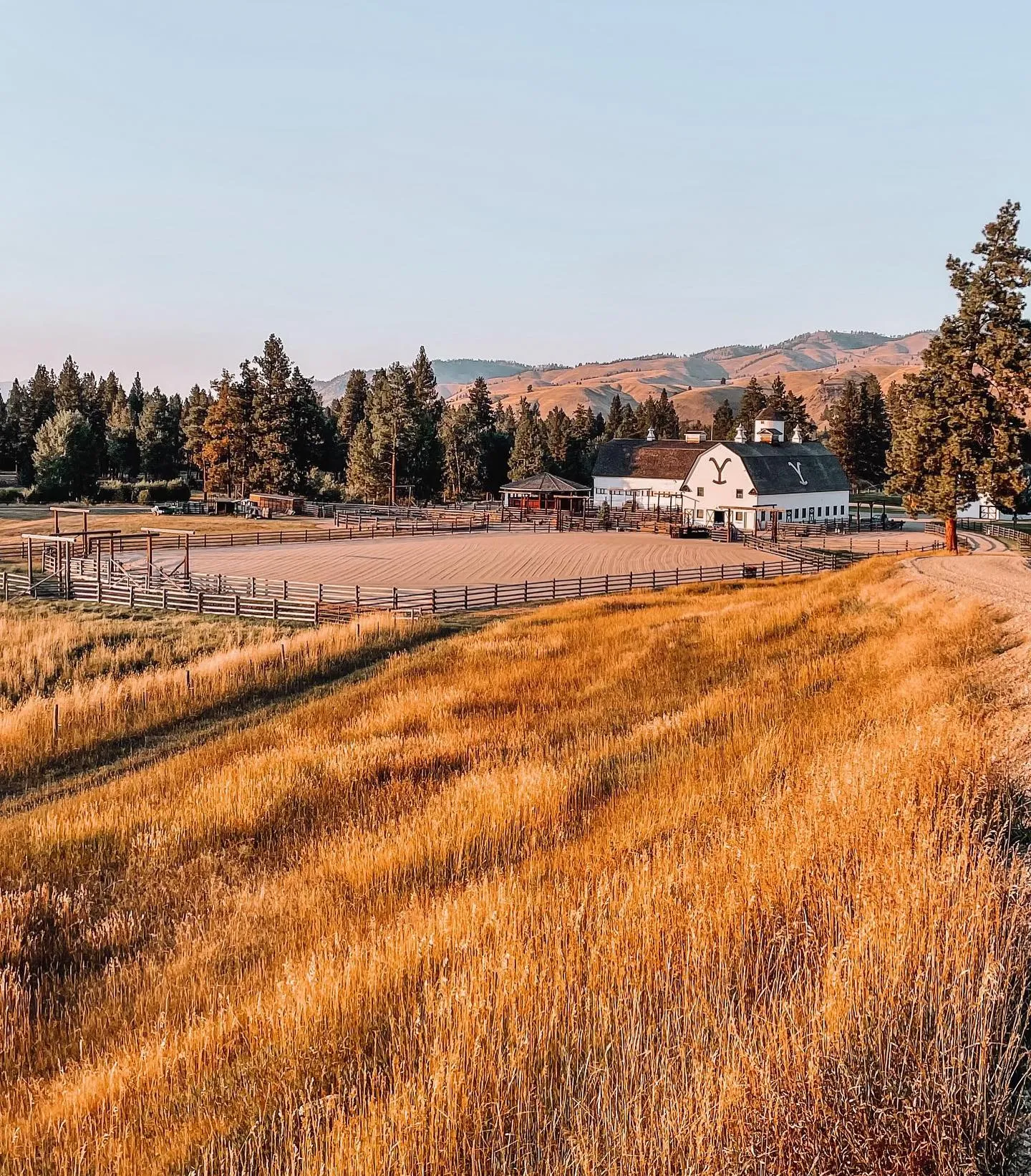
Today the ranch is home to the fictional Dutton Ranch on Paramount Network’s television series Yellowstone.

Watched by millions, the lodge has become an iconic western Montana home, now more than a century old. In between filming, this working Montana ranch doubles as a guest ranch and a family home.

The lodge has become a character in its own right.

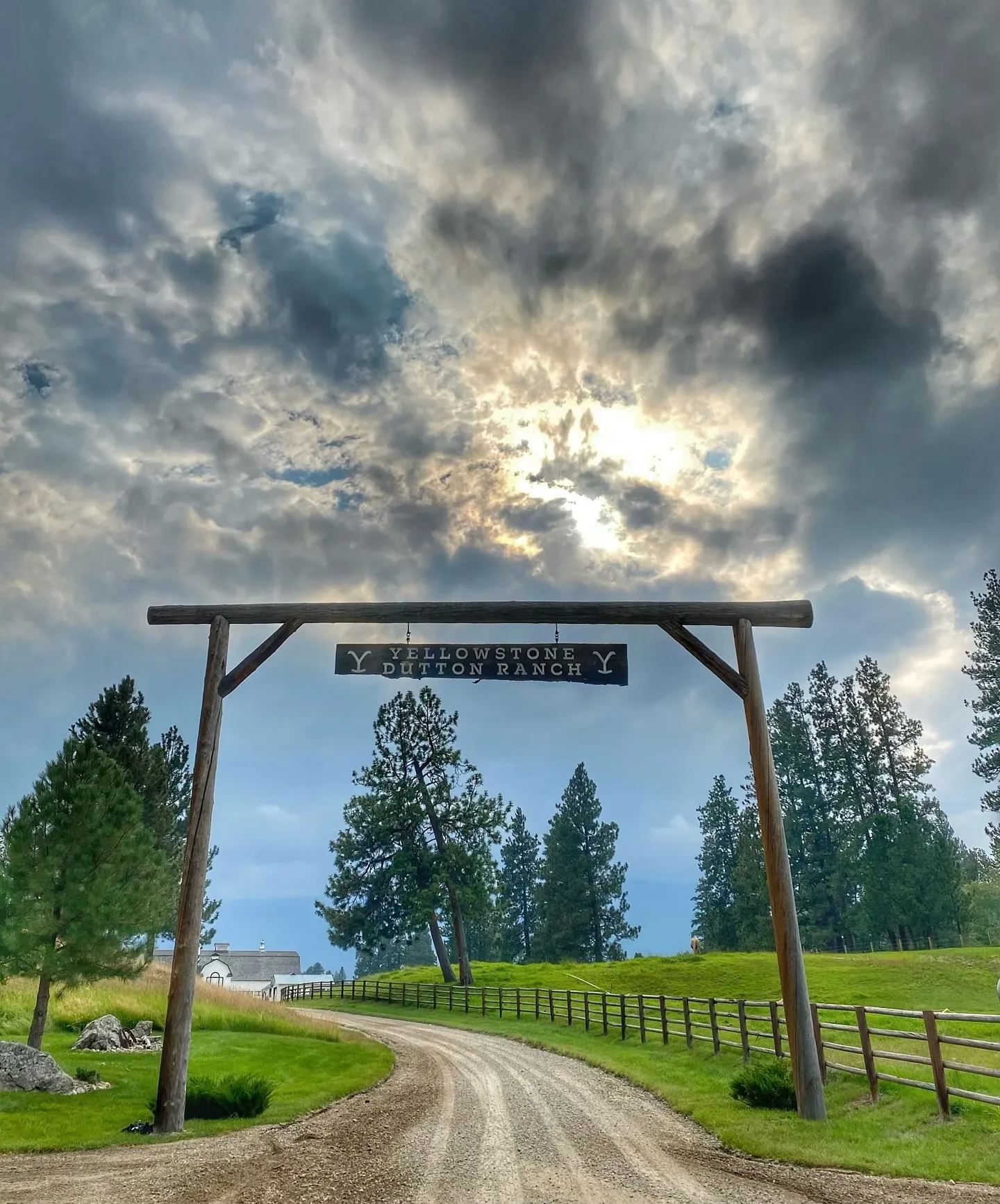
A tall timber gate over a gravel ranch road under a dramatic cloudy sky, its hanging sign reading Yellowstone Dutton Ranch, with pines and a split rail fence
The Dutton Ranch sign over the ranch road.

Yellowstone is a Paramount Network series. Yellowstone Ranch and Chief Joseph Ranch are not affiliated with, sponsored or endorsed by Paramount.

Sources

Further reading.

This history draws on fifteen published references, from the Handbook of North American Indians to the national press.

All fifteen sources
  1. Carling Malouf, “Flathead and Pend d’Oreille,” Handbook of North American Indians Volume 12 Plateau, 1998. 297-298.
  2. “The Salish and the Buffalo,” Historic Saint Mary’s Mission and Museum Est. 1841, 2019. saintmarysmission.org/Salish-buffalo
  3. Jerome Greene, Nez Perce Summer 1877: The U.S. Army and the Nee-Me-Poo Crisis (Helena, MT: Montana Historical Society Press, 2000), 171-173.
  4. Water Rights Bureau, The Montana Department of Natural Resources and Conservation, 2019. dnrc.mt.gov/divisions/water/water-rights
  5. Christine Brown, Tom Ferris, and Chere Jiusto, Hand Raised: The Barns of Montana (Helena, MT: Montana Historical Society Press, 2011), 56.
  6. Brown, Ferris, and Jiusto, Barns of Montana, 56.
  7. Wikipedia 2019. “Howard Clark Hollister.” Last modified 22 March 2019. wikipedia.org/wiki/Howard_Clark_Hollister
  8. Verlyn Klinkenburg, “Chief Joseph Ranch: The paradoxical tale of an historic property near Darby, Montana,” Architectural Digest, June 1994. 120-126.
  9. Christine Brown, Tom Ferris, and Chere Jiusto, Hand Raised: The Barns of Montana (Helena, MT: Montana Historical Society Press, 2011), 56.
  10. Brown, Ferris, and Jiusto, Barns of Montana, 56.
  11. Lauren Feldman, “Historic Dude Ranches,” American Cowboy, 7 January 2015. americancowboy.com
  12. Barbara Lloyd, “Log Mansion That Recalls Indian History,” The New York Times, 8 April 1993. Section C, Page 1. nytimes.com
  13. Eve Byron, “Montana Governor visits set of ‘Yellowstone’ TV show,” 16 December 2017. washingtontimes.com
  14. Amanda Garrity, “Where Is ‘Yellowstone’ Filmed? The Fascinating Story Behind the Real-Life Ranch,” Good Housekeeping, 18 June 2019. goodhousekeeping.com
  15. Robert Rorke, “Montana log mansion brings splendor to ‘Yellowstone,’” New York Post, 13 July 2018. nypost.com

Stay on the ranch

The next chapter is yours.

Two private cabins on the working ranch, each stay with a tour of the ranch and its sets. Reserve March 1 to November 1, 2027.